Structuring Brand Tone as a Versioned MCP Resource Every Agent Product Reads From One Endpoint
Versioned MCP resources give every agent one approved voice.
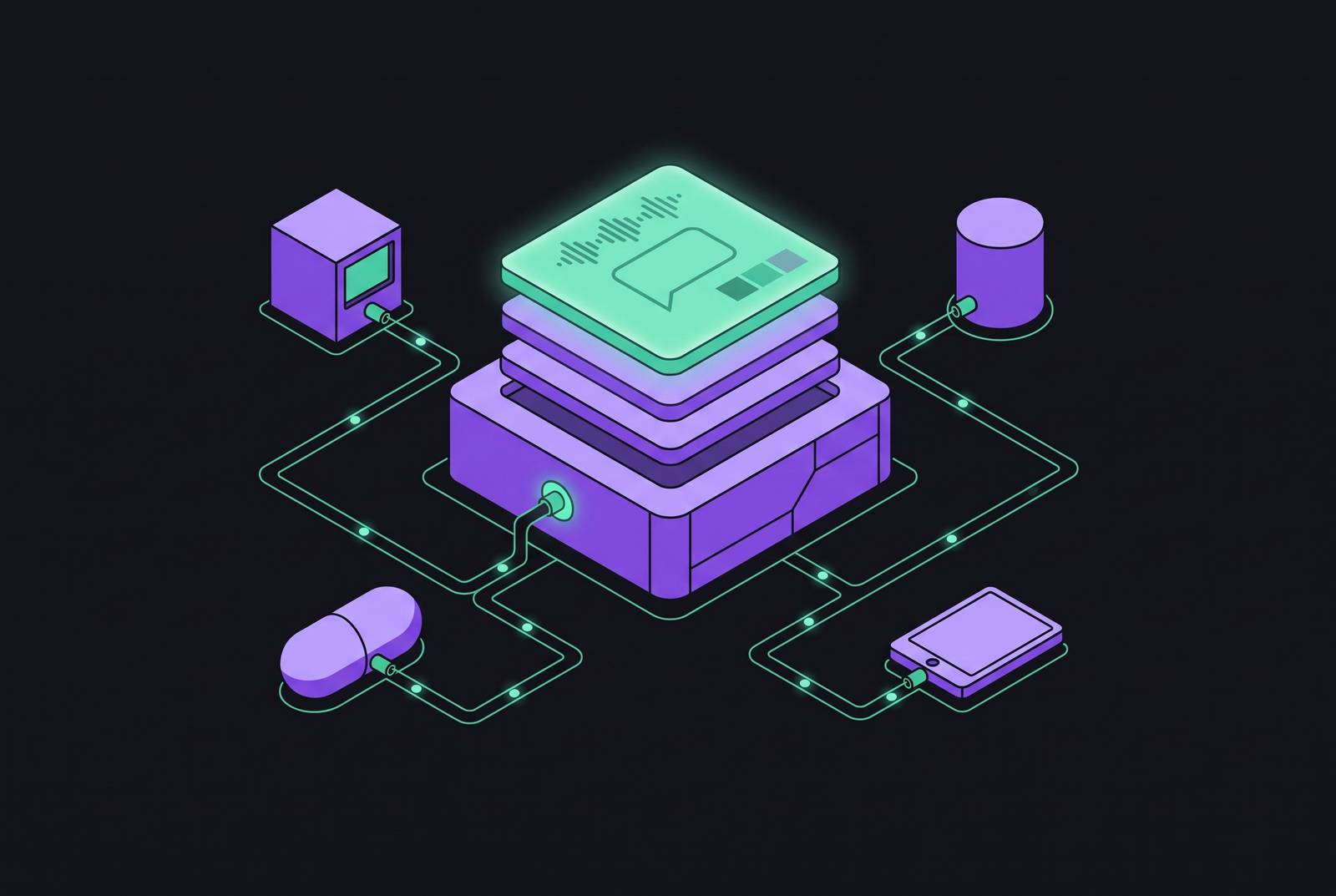
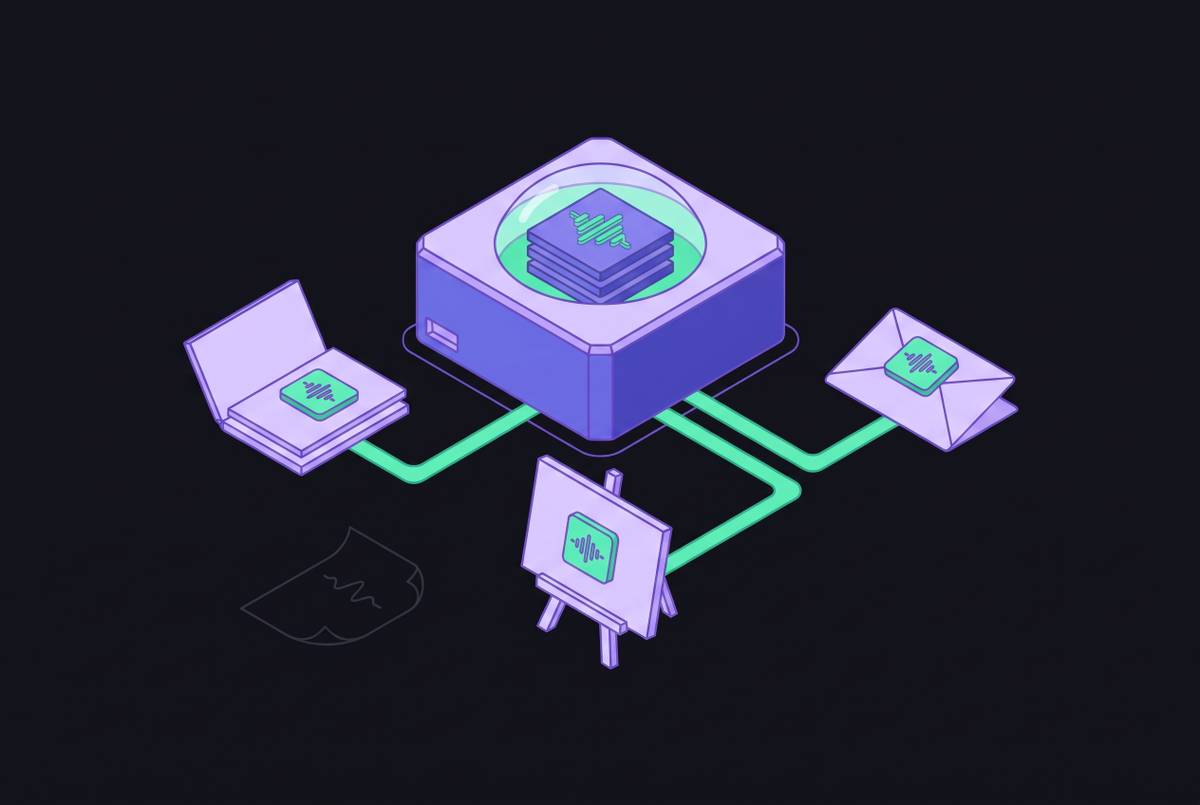
The brand layer for agents is a live, versioned source of brand identity and tone rules that every connected agent reads through one endpoint. Model Context Protocol makes that source available across tools, replacing guidelines pasted into prompts with structured resources and callable checks. The rules in this brand infrastructure can be updated, tested, and traced to the output they governed.
Why brand tone fails at AI scale when it lives in documents and prompts
A customer receives a support reply, a sales email, and a marketing message from the same company, but each sounds like a different organization. Behind those messages, each copilot gets its own copy of the voice rules, or none at all. Each team supplies what it remembers to include. The inconsistency begins before the model generates anything, because there is no shared source governing the three workflows.
Documents and prompts leave that coordination to people. Static PDFs can overflow context windows and cause models to generate incorrect rules. RAG knowledge bases can retrieve conflicting fragments while missing the subtle distinctions that make tone recognizable. Hardcoded prompts avoid retrieval but create version sprawl across departments, without centralized compliance tracking.
There is a gap between having guidelines and using them even without AI. Agents widen it by creating more places where rules can be absent, stale, or interpreted differently. A document remains useful as an explanation for people, but it is not an operating interface for agents. Repeating its contents by hand makes consistency depend on the diligence of every team using it.
What MCP is and how it gives multiple agents the same brand guidelines
Model Context Protocol, or MCP, gives agents a standardized way to discover and use brand context without a custom integration for each tool. It works much like the interface HTTP gave web content. The protocol defines how compatible applications can reach the resources, tools, and prompts through which the brand becomes usable during a task.
Resources are the natural home for shared voice rules. An agent writing a product description can read a voice schema and vocabulary taxonomy. Tools provide executable functions, such as checking a draft against tone rules or rewriting it in brand voice. Prompts have predefined templates for each channel, so the same brand can sound different in a support reply and a campaign email.
These primitives separate guidance from the operations that apply it. A resource states the approved vocabulary, while a tool can check whether a draft follows that vocabulary. A prompt frames the task at hand without becoming another copy of the whole brand guide. That separation makes MCP a suitable interface for the brand layer, provided the guidance behind it is structured enough for an agent to use.
What brand tone looks like when it is structured for a machine to read
A machine-readable voice profile uses typed fields, weighted attributes, and enumerated rules in place of broad descriptions. Formal versus casual and technical versus accessible become explicit weightings rather than adjectives an agent must interpret unaided. Vocabulary becomes inclusion and exclusion lists of preferred terms and forbidden jargon. Sentence-length limits and passive-voice limits become rules that can be measured. Contextual modifiers then adjust those defaults for audience, channel, or customer sentiment.
The distinction is between describing a voice and specifying its behavior. A personality attribute establishes the baseline, while a contextual modifier explains when that baseline should change. Vocabulary rules constrain word choice independently of those adjustments. This gives the agent separate controls rather than a paragraph in which tone, terminology, and exceptions are mixed together.
Three reusable file types give that structure a practical shape. A Voice Profile defines tone, vocabulary, sentence structure, and what to avoid. A Body of Work contains annotated examples showing how the approved voice sounds in actual writing. Design Tokens define the visual and formatting rules that govern the same output. JSON design tokens, voice and tone schemas, and compliance rule sets provide parseable forms for these different kinds of guidance.
Qonto’s Tolki agent demonstrates how structured instructions support variation without abandoning a shared voice. It accesses a database of more than 200 localization instructions to adapt content for French, German, Italian, and Spanish markets while maintaining Qonto’s distinctive brand voice.
How a live MCP brand server works in practice
Pulumi runs a brand server at brand.pulumi.com for in-house teams, agencies, and partners. As of mid-September 2026, its resources included brand voice, writing rules, and binding product names, together with tools an agent could call during its work. The server makes brand guidance available through a shared interface.
Brand Context has a hosted option that works in much the same way. Its MCP server installs into Claude Code, Codex, Cursor, and similar tools, connecting a brand profile to Claude, ChatGPT, and other AI assistants. It lets users write in brand voice and check drafts against guidelines within the chat interface. Pulumi provides a concrete deployment example, while Brand Context provides a hosted option.
Shopify’s storefront MCP server demonstrates a related architectural pattern. Each store receives an automatically provisioned endpoint that agents can discover for catalog, cart, and policy flows. The example establishes that endpoint-per-brand provisioning is an engineering-solved problem. It does not, by itself, supply the voice schema or tone checks that a brand implementation needs.
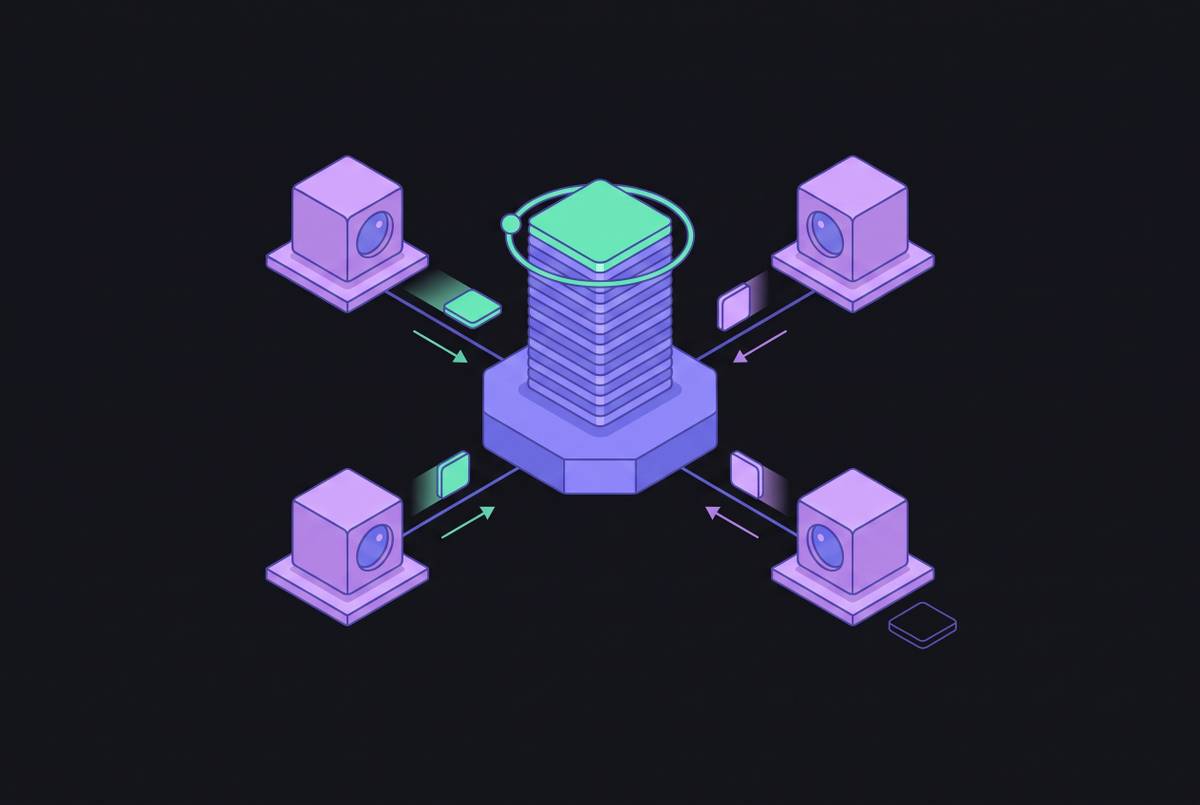
In a brand workflow, the agent calls the endpoint and declares its task context. It receives the relevant voice schema and vocabulary rules as resources, calls a tool if it needs a tone check or rewrite, and returns structured output. No person pastes the rules into the task. For agencies and multi-brand teams, a single server can instead accept a brand_id parameter in every request, identifying the applicable rules without maintaining separate prompt libraries for each client.
Why versioning brand tone the way code is versioned changes what "brand compliance" means
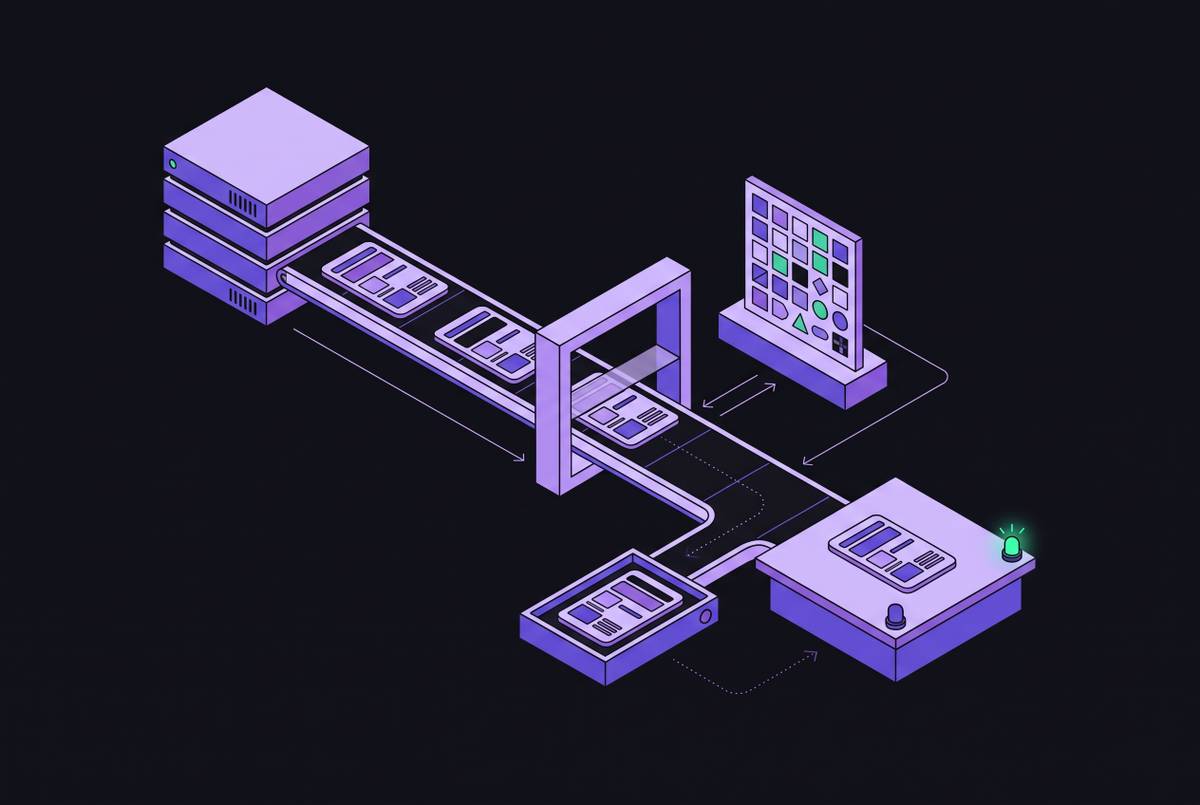
Microsoft Azure AI Foundry Toolboxes demonstrate how shared access can coexist with controlled releases. A consumer endpoint always serves the promoted default version, while a version-specific endpoint allows testing before promotion. Applied to brand resources, that pattern separates an approved voice from an in-progress revision.
MCP itself models explicit version discipline. Its current protocol version is 2026-07-28, following published revisions dated 2024-11-05, 2025-03-26, 2025-06-18, and 2025-11-25. Every request declares its protocol version through the io.modelcontextprotocol/protocolVersion key in _meta. Over Streamable HTTP, the matching value appears in the MCP-Protocol-Version header. Brand schemas can state their versions in the same way while keeping the schema version separate from the protocol version.
For brand teams, semantic versioning distinguishes breaking changes from refinements, with deprecation notices recorded in resource metadata. A new forbidden-words list or revised formality weighting can receive a major version bump, while refinements receive a minor one. The 2026-07-28 protocol update also introduced cacheable list results and cacheable resource reads, allowing unchanged tone schemas to be reused across generation calls.
To get that benefit, teams need to record which approved schema was used for each output. A log can then identify version 4.2 of the voice schema rather than leave a client, regulator, or legal team with the explanation that the AI generated the content. Evidence also requires the output to change when a relevant rule changes. An open brand repo, where each change records a date, reason, and sender, provides the venue for making that relationship inspectable.
The governance gap that technology alone does not close
Governance is the bottleneck. Figma already exports tokens, and content operations platforms already support structured metadata. The technical pieces exist before a brand team adopts MCP. What remains unresolved is who owns the schema, who approves changes, and how regional or functional teams are prevented from turning one voice file into competing versions.
A standardized connection cannot settle those decisions. MCP does not automatically guarantee data quality, business relevance, or regulatory conformity. A server distributing stale or contested rules can be worse than a document because it applies the wrong guidance at scale. The endpoint is authoritative only if the organization has established whose decisions it represents.
The versioned-repo pattern makes that authority operational. A named owner for each schema section establishes responsibility, while pull-request discipline creates a defined path for proposed changes. A deprecation lifecycle makes replacement part of the resource’s management.
There is also a boundary to what the endpoint can govern. A voice guide limited to owned content governs less than a third of what AI uses, because Reddit discussions, review platform profiles, editorial coverage, and forum participation also shape the pattern AI reads as a brand’s voice. An MCP server cannot directly control what appears in those places. Its scope is the content a team produces, including copy, images, decks, and emails. Applying shared rules across that owned output is the highest-leverage surface available.
What to build first — a minimal viable brand MCP resource that actually governs output
A team should begin with a minimal structured tone resource containing one to two pages of machine-readable voice rules and five to ten annotated examples. The Voice Profile should express personality as typed fields with explicit weightings, vocabulary as inclusion and exclusion lists, and syntax as measurable constraints. JSON is a common format for this work.
The Body of Work should contain real, brand-approved writing annotated to show which rules each example demonstrates. That gives an agent examples to match as well as constraints to follow. Both resources should connect to one MCP endpoint and one workflow, such as a weekly campaign email, social caption, or product description. The test is whether output changes when the rules change. Seeing that change gives stakeholders a reason to trust the system and invest in using it more widely.
Versioning should begin with the first file. The initial schema needs a version, date, and rationale, and subsequent edits should become versioned commits. Teams managing multiple brands or clients should also include brand_id from the first commit, because retrofitting multi-brand support is significantly more expensive. These are small initial commitments with operational consequences. They preserve a clear relationship between the selected brand, the approved rules, and the work produced.
Adobe’s 2026 AI and Digital Trends report, a global survey of executives and practitioners, identifies agentic AI’s promise of always-on brand intelligence orchestrating tasks across the content supply chain at scale. Capturing that opportunity depends on brand context being usable by the systems doing the orchestration. A team can prepare before that layer arrives. A modest resource that is structured, versioned, queryable, and demonstrably affects output is a concrete start.