How Agent Sessions Collapse Brand Distinctiveness When Context Is Shared Across Clients
Shared agent context erodes brand distinctiveness without isolated, machine-readable identity rules.

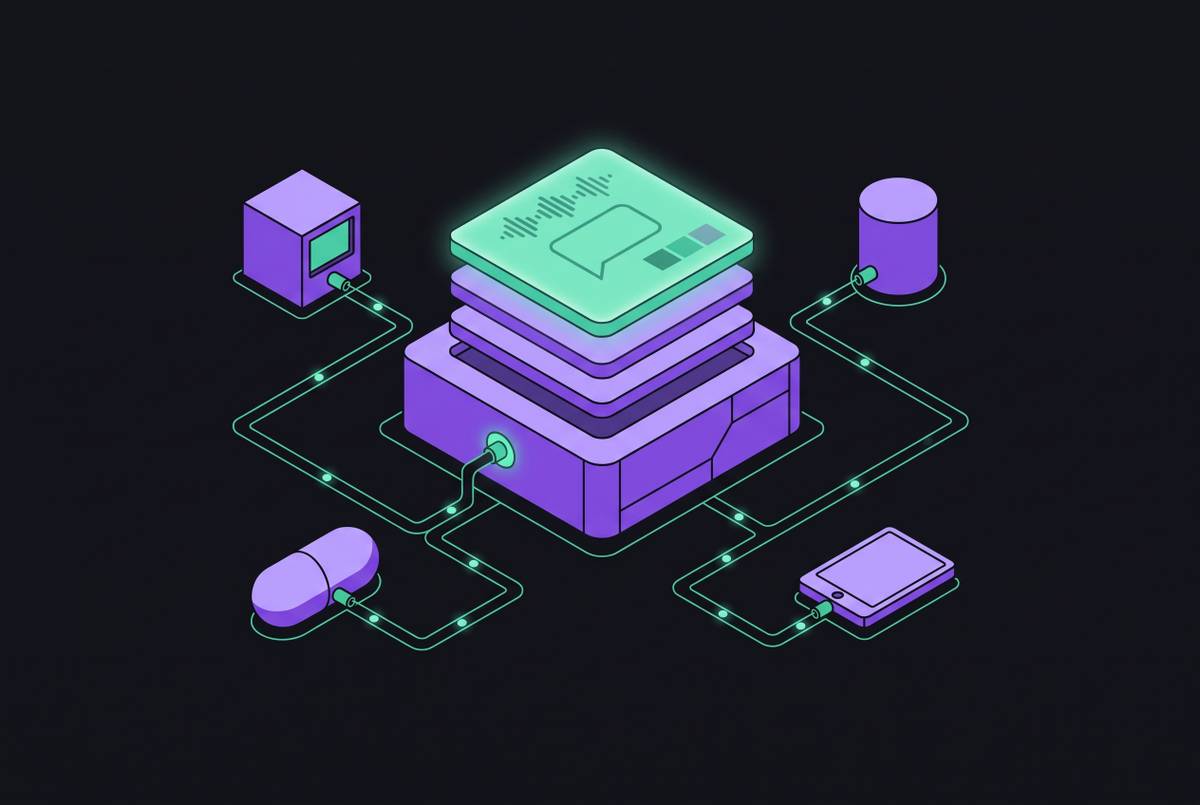
The brand layer for agents is machine-readable infrastructure for each client that gives every connected agent the same up-to-date voice rules, visual identity, and positioning. Without it, shared context makes agents infer identity, pushing distinct brands toward a generic average. To keep agents on brand without someone prompting them at every step, they need isolated, versioned context they can query before generation, rules that can be traced, and review before publication.
Why agents infer brand identity instead of reading it
An agent infers brand identity when the rules that define it are absent from its context window. Guidelines may exist in slide decks, PDFs, or a strategist’s memory, but their existence does not make them available to the agent. The model fills the gap with nearby text, training patterns, and statistical regularities across millions of examples. That substitution favors familiar language and structures over the distinctions that make one brand unlike another.
The resulting output can be fluent, relevant, and competitor-adjacent without containing an obvious mistake. A model does not need to misunderstand a supplied rule to flatten a brand. The rule may never have reached it. Without the reasoning that explains why a brand favors one message over another, the agent substitutes patterns that look appropriate for the category. What appears to be weak creative judgment is therefore often a failure of context architecture.
Atlan’s 2026 context management analysis identifies the broader enterprise pattern as business context that was never made machine-readable. For brand work, that diagnosis shifts the intervention away from polishing each individual request. Prompt engineering remains necessary, but it cannot supply institutional knowledge that has not been captured. Context engineering addresses that missing foundation by curating, versioning, and injecting structured metadata. The distinction is between describing an assignment and making the brand available to the system performing it.
What agentic brand drift looks like in practice
Voice flattening is the most immediate expression of this substitution. Instructions such as “make this friendly and professional” or “write in a witty tone” can produce identical caption structures across unrelated clients. Those descriptions specify a default. Each caption may look fine on its own, but seen together, they show that different brands now have the same cadence.
Visual production has a related failure mode called “style creep.” Across a multi-asset campaign, different prompts, contributors, and tool configurations gradually pull the work out of alignment. Temporal drift changes the emphasis. A brand whose teams consistently led with values messaging can find its AI-generated content progressively foregrounding performance and feature claims. The model has access to statistical patterns of high-performing content but not to the organizational reasoning that made values-forward messaging part of the brand’s identity.
Standard monitoring can miss all of these changes. Performance metrics may remain stable or improve while identity diverges, so commercial success does not establish brand fidelity. Meanwhile, responsibility for cumulative divergence diffuses across engineers, deployment managers, and vendors, leaving no named person monitoring the change. The urgency comes from the gap between detection and consequence. Once inconsistent work reaches an audience, reputational cost can arrive before internal monitoring catches the drift, so correcting later output does not prevent the earlier exposure.
Why shared context surfaces accelerate the collapse
A shared, unstructured context surface turns missing brand knowledge into a coordination problem. When multiple agents or clients draw from it without isolation, the information available for generation no longer represents a dependable per-client identity. Independent retrieval pipelines do not necessarily resolve that weakness. When each agent team builds its own pipeline, fragmentation, inconsistency, and ungoverned access can produce an averaged composite.
Even within one client’s workflow, coordination can erode the decisions that establish distinctiveness. Truncated histories and unclear intent propagation mean that an earlier brand decision may not reach the next agent. Contextual Memory Intelligence research identifies the foundational blind spot as workflows that rarely store or reflect on the full context in which decisions are made. That omission produces repeated errors and a lack of clarity. For brand work, saving a decision without the reason behind it leaves later agents without a basis for keeping it.
Agency production makes the exposure especially sharp because volume multiplies the use of the shared surface. A high-performing consumer brand in 2026 ships many ad creatives each month across a range of platforms. When two clients share an unisolated generation surface, drift starts at the first shared inference. Human-held nuance provides only a fragile counterweight to that process. If the account manager alone knows the client’s distinctions, a sick day, handoff, or new hire can turn unavailable institutional knowledge into divergent output.
How MCP makes per-client brand context queryable — and what goes wrong when isolation fails
MCP changes the relationship between an agent and the identity it is asked to express. The agent can query a live source with a specific client’s voice rules, visual identity, and positioning, so it need not rely on training patterns to fill in missing context. Anthropic open-sourced MCP on November 25, 2024. The ecosystem covers Claude, ChatGPT, Cursor, Visual Studio Code, and a wide range of agent frameworks and MCP servers spanning tools from Notion and Google Drive to specialized image and video generation tools.
An MCP server can expose specific do’s and don’ts for a tool to query before generating a word or pixel. Compatibility does not, however, establish client isolation. When a single server instance serves multiple brand clients, tenant boundaries must hold at every layer, including application logic.
Agents keep conversation history and tool call results in their context windows. If tenant boundaries are not strict, one client’s API responses or error messages can appear in another client’s session. The model may then use leaked context in its output without conventional access logs showing that data was transferred between clients. This is both a confidentiality risk and a brand risk. Information can influence generation simply because it has entered the agent’s working context.
Asana discovered a flaw in its MCP server on June 4, 2025, and publicly disclosed it on June 18, 2025. A faulty isolation check could let one organization’s users see another organization’s project data, tasks, comments, and files. Asana estimated roughly a thousand customers were exposed. No prompt injection was required, only a multi-tenant authorization bug. Between January and February 2026, security researchers filed multiple CVEs targeting MCP servers, clients, and infrastructure components, further establishing isolation as an active concern.
What brand context must look like to be agent-readable
Agent-readable brand context consists of explicit rules in structured documents that an AI system can load and follow before generation. It is not simply a guidelines PDF written for designers or an aspirational statement stored in a Notion document. A broad description of personality leaves the agent to decide what that personality means, while specific rules constrain the choices through which identity appears.
Voice context therefore includes banned words and sentence patterns rather than relying only on adjectives such as friendly or witty. Messaging context names the pillars and gives supporting claims and proof points for each one. Visual identity requires parameters that can be checked programmatically. These components give the agent instructions it can apply. They also give reviewers a defined basis for distinguishing an acceptable variation from a departure, rather than asking them to judge whether an asset vaguely feels right.
Cognizant’s August 2025 deployment of a thousand context engineers to industrialize agentic AI for enterprise clients signals that context engineering has become a distinct, resourced discipline. Atlan’s framework expresses the governing principle as one continuously maintained context substrate that any agent can query. In brand work, that substrate serves one client while keeping unrelated clients’ identities out. It is shared infrastructure across prompts and sessions. Because brand identity changes, updates must be versioned and propagated to connected agents rather than silently diverging across separate copies.
Why context isolation and context currency must be designed together
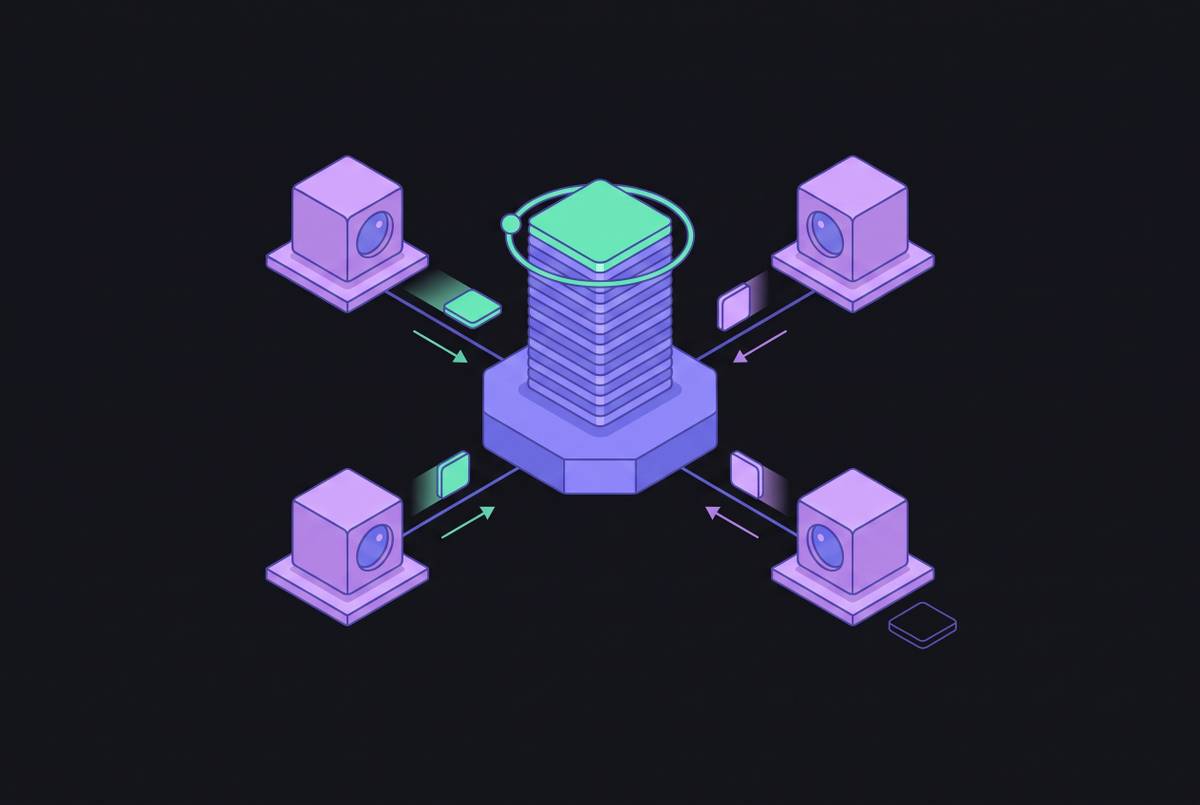
Isolation keeps one client’s context out of another client’s session. Currency keeps every agent working for the same client aligned with the current version of that client’s identity. These requirements pull in opposite directions only when sharing and separation are treated as all-or-nothing choices. The correct boundary separates clients while allowing the agents serving each client to query a common source.
With isolation but no currency, each agent or product has its own copy of the brand. When the identity changes, those copies diverge, reproducing prompt-based inconsistency one layer deeper in the infrastructure. Currency without isolation creates the reverse failure. Every agent can query a shared context layer, but tenant boundaries do not prevent unrelated information from entering a session. The Asana incident makes the access risk of that arrangement concrete.
The architecture that satisfies both requirements puts brand context in one versioned, governed place per client. Every connected agent serving that client queries the same source, and changes propagate as versioned updates that every agent picks up. The memory research frames the deeper requirement as a shift from passive data to adaptive infrastructure. Drift detection and rationale preservation belong within that infrastructure, rather than being added after divergence becomes visible. Saving why a rule exists helps keep the organization’s intent behind it intact.
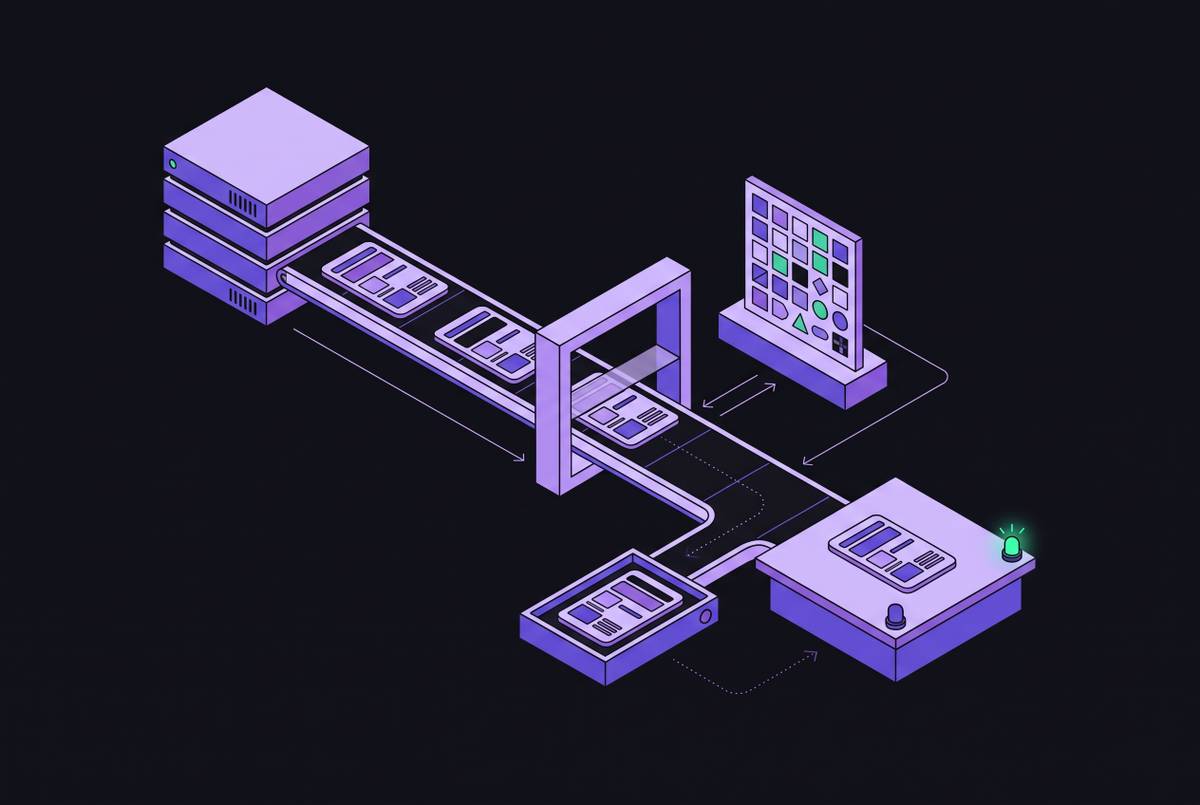
Governance then requires a traceable path from brand rule to generated output. A compliance officer must be able to audit the context layer and its lineage. AI-generated work should still be checked against the brand before it ships, with evidence for each check. That review is the final gate for what inference still gets wrong.
What agencies and multi-brand teams need to put in place
For agencies and multi-brand operators, the practical decision is where each client’s identity will live and how agents will reach it. Teams should place that context in per-client, machine-readable, current infrastructure rather than leaving it in a strategist’s memory, a shared document, or a prompt template. The distinction is between a reference and an operating source. A reference depends on someone remembering to consult and interpret it, while a queryable source makes defined brand rules available within the agent workflow.
Teams should treat per-client isolation as a precondition for distinctiveness. Even carefully written prompts cannot make up for a generation surface that mixes context from different clients. When an MCP server serves more than one client, teams must check tenant boundaries along the whole context path, including the tool results that enter agent sessions. Inside each client boundary, connected agents need the same version, with no copies kept up to date on their own.
Quality remains the primary blocker for agent engineering professionals broadly, with accuracy, relevance, consistency, and adherence to brand or policy guidelines forming the core gap. For multi-brand teams, that makes context lineage a quality requirement as well as a governance requirement. Output logs alone cannot show which brand rules shaped an asset. Teams need traceability from those rules to the generated work so that diffuse technical responsibility does not leave cumulative identity drift unexamined.
AI-generated assets should receive the same review discipline applied to a traditional photoshoot, rather than being treated as ready because generation is complete. Audiences can detect distorted or inconsistent output before internal monitoring registers the problem. With isolated, current context supplying the production system and evidence-based review controlling release, agencies can scale access to a brand’s identity without replacing that identity with the model’s default.